


Realistic rock walls can completely transform a space. Whether it’s a restaurant feature wall, a zoo habitat, or a backyard landscape, natural stone creates an environment that feels grounded and immersive. But building those features with real stone or cement rockwork can be time-consuming, heavy, and difficult to modify later.
That’s why so many builders and designers choose Universal Rocks panels. They recreate the texture, depth, and natural variation of real stone while remaining lightweight and much easier to install.
The secret to their performance comes down to the materials used to create them.
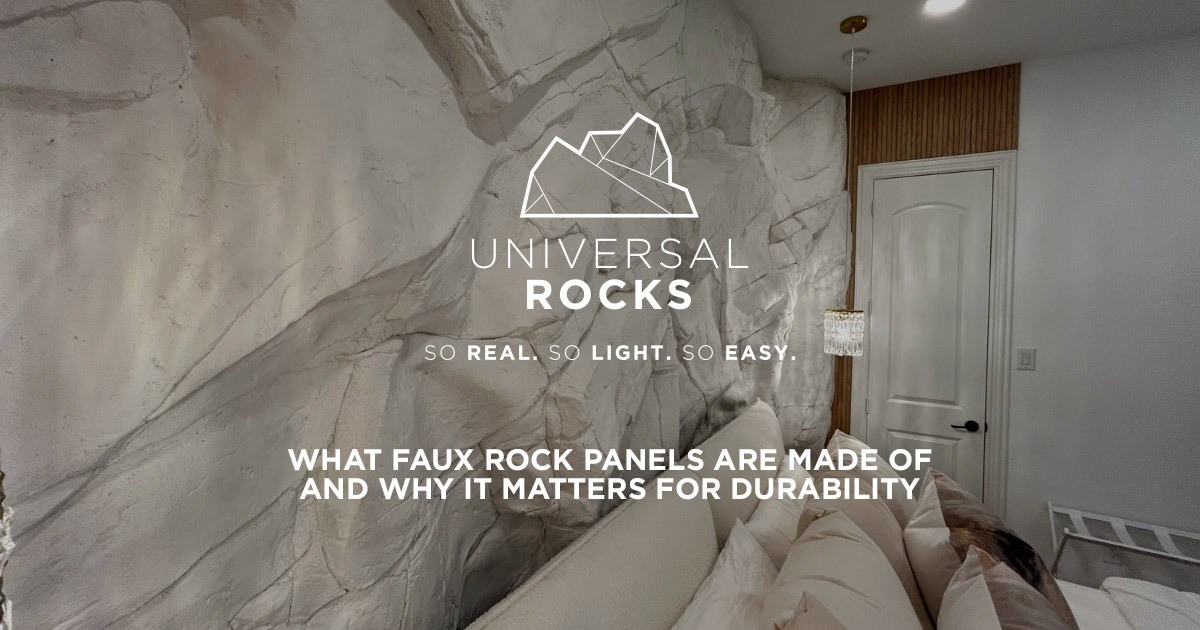
What Are Faux Rock Panels Made Of?
Universal Rocks panels are made using polyurea with a polyurethane foam backing.
Polyurea is an extremely durable material often compared to the protective coating used in truck bed liners. It’s designed to handle impact, moisture, and temperature changes while staying flexible over time.
Behind that outer layer, the polyurethane foam backing gives the panel its structure while keeping it lightweight and easier to work with during installation.
What really makes these panels look realistic, though, is how the surface texture is created. Instead of relying on paint alone, crushed natural rock sands are embedded directly into the polyurea surface. This creates natural color variation and subtle inconsistencies that mimic real stone.
The result is a surface that doesn’t just look like rock — it actually feels convincing up close.
How Faux Rock Panels Hold Up Over Time
Polyurea is known for being incredibly tough while still remaining flexible. That combination plays a big role in how faux rock panels hold up over time.
Because the material can absorb impact without cracking, it performs well in environments where durability matters — from busy restaurants and commercial spaces to zoos, aquariums, and exhibit environments.
There’s even a well-known example of a panel falling off a truck during winter conditions at –30°C (–22°F). After sliding across the road, the panel remained completely intact without cracking. That kind of resilience is exactly why this material is used in demanding applications.
Indoors, faux rock panels can last indefinitely since they aren’t exposed to UV radiation. Outdoors, installations have demonstrated more than 20 years of performance, even in harsh environments.
A Simpler Way to Build Rock Walls
Another major advantage of faux rock panels is how much simpler they are to install compared to traditional cement rockwork.
Building a cement rock wall typically requires multiple workers, two layers of cement, carving, shaping, and extensive cleanup. Even a modest rock wall can take two full days with a small crew.
Faux rock panels streamline that process significantly. Because the panels are pre-formed and lightweight, installers can cover large wall sections much faster. Panel seams can often be blended in 10–15 minutes, allowing projects to move forward quickly.
Panels can also be attached to a variety of surfaces, including:
- Wood framing
- Sheetrock or drywall
- Concrete walls
- Metal structures
This flexibility makes them useful in restaurants, homes, retail spaces, themed environments, and exhibit installations where construction timelines and structural load are important considerations.
Where Faux Rock Panels Are Used
Universal Rocks panels are designed to work in a wide range of environments where natural rock aesthetics help shape the overall experience.
Some of the most common applications include:
- Restaurant feature walls and themed dining spaces
- Hotel lobbies and immersive interiors
- Home accent walls and entertainment rooms
- Zoos, aquariums, and wildlife exhibits
- Outdoor kitchens, retaining walls, and landscape features
- Retail displays and themed commercial environments
Different panel styles can help achieve different looks. For example, the Cobblestone Rock Wall Panel creates a more structured stone appearance, while the Cavern Rock Wall Panel includes deeper ledges and rugged textures that resemble natural rock formations.
Why Designers Choose Faux Rock Panels
The shift from cement rockwork to modern faux rock panels has made it much easier to create natural-looking rock environments.
By combining durable polyurea materials, lightweight foam backing, and real mineral textures, Universal Rocks panels deliver the look of natural stone without the weight, mess, or long installation timelines. For designers, builders, and facility planners, that means creating realistic spaces that install faster and perform reliably for years.
Build Natural-Looking Spaces That Last with Universal Rocks
Whether you're designing a restaurant feature wall, a themed environment, or an exhibit space, materials matter. Universal Rocks panels are engineered to combine realistic stone appearance with durability and efficient installation.
If you're planning a project, contact Universal Rocks to learn how faux rock panels can help bring natural-looking rock features to life.