


Creating immersive environments is an important part of theme park, museum, zoo, and exhibit design. From towering artificial cliffs and cave-like passageways to realistic stone walls and scenic backdrops, rockwork can transform an ordinary space into an environment that feels completely different.
For decades, cement rockwork has been a common way to create large-scale artificial rock formations. However, cement isn't the only option. Today, lightweight rock panels give theme parks and commercial attractions another way to achieve realistic rock scenery without the weight and installation demands associated with traditional cement rockwork.
Universal Rocks' faux rock panels recreate the texture, depth, and appearance of natural stone using a durable, lightweight polymer material. For themed attractions and exhibits, that difference can open up new possibilities for both new construction and renovations.
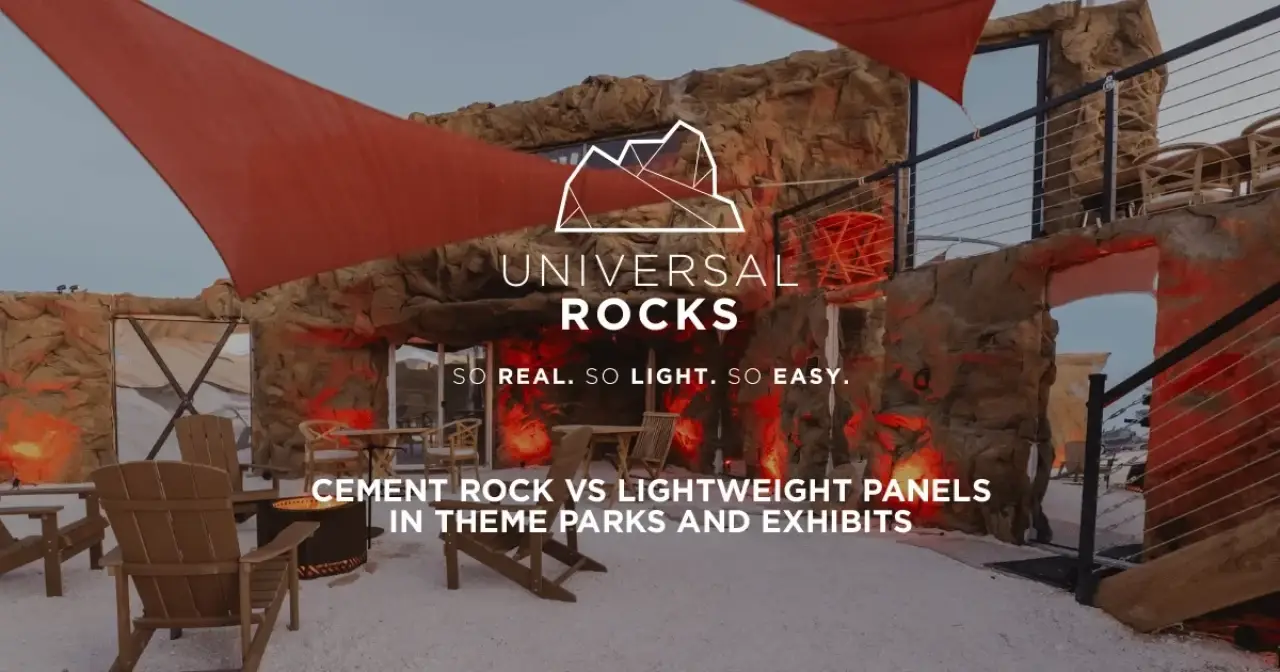
Cement Rockwork vs. Lightweight Rock Panels
Both cement rockwork and lightweight artificial rock panels can be used to create realistic themed environments, but the materials differ significantly in how they are incorporated into a project.
Traditional cement rockwork is typically constructed and shaped on site. It can create substantial permanent formations, but its weight and installation requirements need to be considered during project planning.
Lightweight faux rock panels take a different approach. Rather than building up a rock formation with cement, installers use molded panels that already provide the texture and dimension of natural rock. Panels can then be positioned and blended together to create larger rock walls and scenic environments.
For projects where weight, installation flexibility, or existing structural conditions are important considerations, lightweight panels can provide a practical alternative.
Why Weight Matters for Theme Park Rockwork
One of the biggest differences between cement rock and lightweight rock panels is weight.
Cement rockwork can add substantial weight to the structure supporting it. Depending on the size and location of the installation, that may need to be factored into the structural design of the project.
Lightweight rock wall panels provide dimensional rock texture without requiring the same amount of material as cement or natural stone.
This can make lightweight artificial rock particularly useful for:
- Existing walls and structures
- Indoor themed attractions
- Museum and exhibit environments
- Scenic facades and backdrops
- Renovations of existing attractions
- Large decorative rock walls
For designers renovating an established space, reducing unnecessary structural weight can create more flexibility when determining where artificial rock features can be incorporated.
Flexible Installation for Themed Attractions and Exhibits
Installation is another important consideration when comparing cement rockwork and lightweight faux rock panels.
Because cement rockwork is generally constructed in place, much of the shaping and finishing process happens on site. Lightweight panels arrive with their rock texture already formed and can be cut and adjusted during installation.
Universal Rocks panels can be cut using common cutting tools and installed over several types of existing surfaces. Depending on the project, installation methods can include screws, timber battens, or appropriate adhesives.
If additional backing or foam is needed for a particular installation, that work is typically completed on site.
This flexibility can be especially valuable for theme parks, museums, zoos, and exhibits where designers need to work around existing walls, structural elements, pathways, or other components of the attraction.
Durable Artificial Rock for Commercial Environments
Theme park rockwork needs to do more than look realistic. It also needs to perform in a demanding commercial environment.
Universal Rocks manufactures its lightweight rock panels from a durable polymer material designed to provide both strength and flexibility. The material can withstand substantial impacts and remain flexible through changing temperatures, making the panels suitable for a variety of indoor and outdoor applications.
That durability is important in busy attractions where scenic elements may be exposed to weather, maintenance activity, equipment, and regular interaction within high-traffic environments.
Project-specific options, including Class A fire-rated panels, are also available when required for certain commercial applications.
Creating Realistic Theme Park and Exhibit Rockwork
Realistic artificial rockwork depends on more than simply covering a wall with a stone texture. The entire environment should feel intentional.
Lightweight faux rock panels can be combined and positioned to create larger formations, allowing designers to build environments inspired by cliffs, caves, rocky outcroppings, and other natural landscapes.
Universal Rocks offers a variety of panel textures, sizes, and colors that can be incorporated into different themed environments. Panels can also be painted with an appropriate exterior-grade paint when a project requires a more customized finish.
This makes artificial rock panels useful for creating:
- Theme park scenery and attractions
- Museum and educational exhibits
- Zoo habitats and visitor areas
- Indoor entertainment spaces
- Scenic rock walls and backdrops
- Cave and cliff-inspired environments
- Restaurant and hospitality attractions
By combining different panels and carefully finishing transitions between them, designers can create the appearance of a much larger continuous rock formation.
When Are Lightweight Rock Panels a Good Alternative to Cement?
Cement rockwork may still be appropriate when substantial permanent rock structures are part of a project's original construction plans. Lightweight panels provide another option when designers need realistic artificial rock without relying entirely on cement construction.
Lightweight rock panels may be particularly useful when a project calls for:
- Realistic artificial rock with less structural weight
- Large-scale rock walls and scenic backdrops
- Flexible installation over existing surfaces
- Customizable rock textures and finishes
- Indoor or outdoor themed environments
- Durable materials for commercial settings
- Renovations of existing attractions
- Large-format panels for expansive scenic areas
Ultimately, the best material depends on the project's size, structure, location, design requirements, installation conditions, and intended use.
Lightweight Faux Rock Panels for Theme Parks and Commercial Exhibits
Creating an immersive attraction doesn't necessarily mean building every rock formation from cement. Lightweight faux rock panels offer theme parks, museums, zoos, and other commercial attractions a way to incorporate realistic stone textures and large-scale scenery while reducing many of the weight and installation considerations associated with traditional cement rockwork.
Universal Rocks offers commercial faux rock panels in a range of realistic textures, sizes, and finishes for projects ranging from individual scenic walls to large themed environments.
Whether you're designing a new attraction or transforming an existing space, the right artificial rock system can help bring the environment to life.
Planning a theme park, exhibit, or commercial attraction? Contact Universal Rocks to discuss your project and explore lightweight rock panel options for your space.